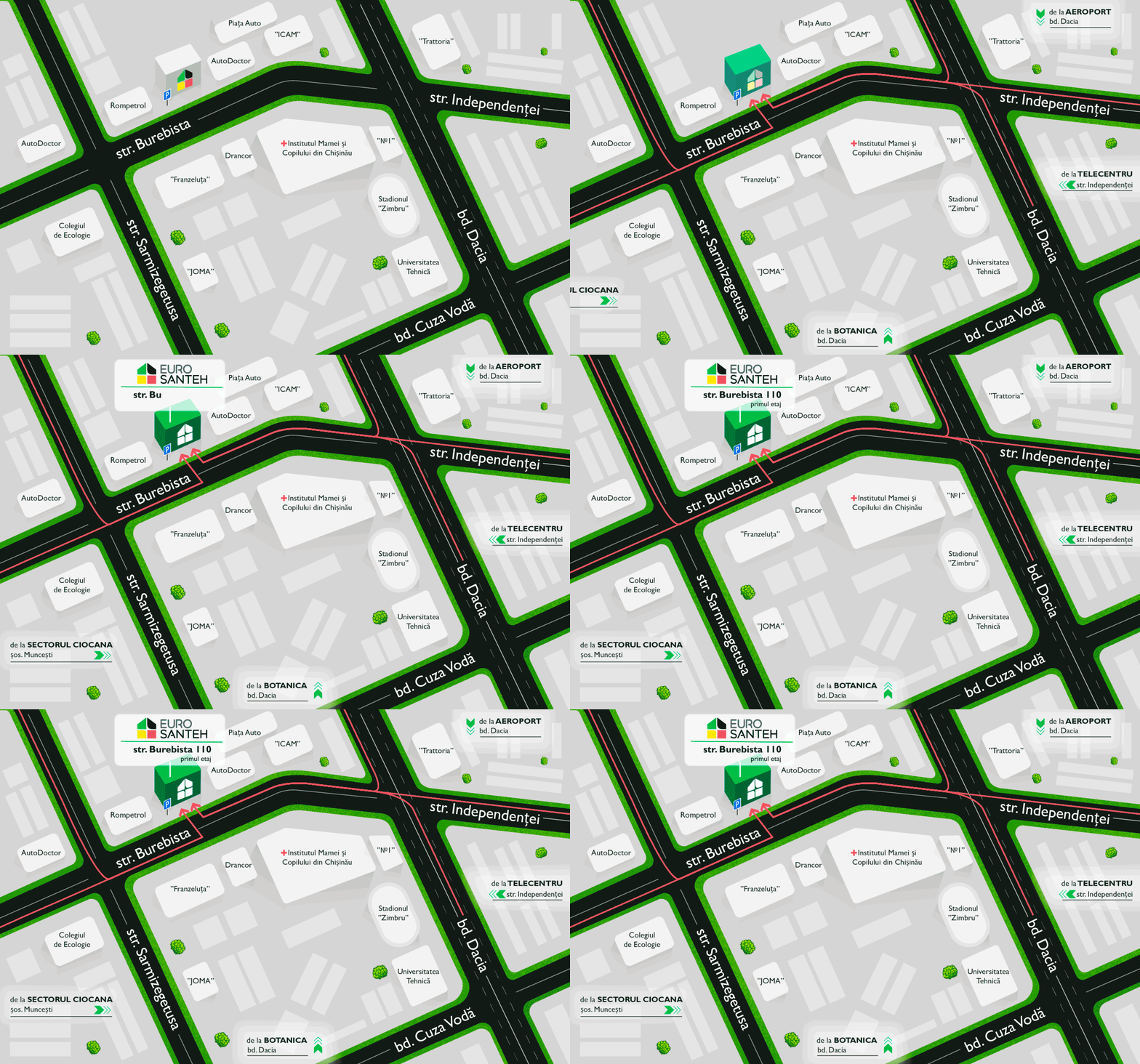
Chisinau, str. Burebista 110




 Call
Call 

 Product has been added to favorites

Sewage pump installation in Chișinău and across Moldova


 Reviews


When a sewage pump is needed
A sewage pump is required when wastewater cannot flow into the sewer system by gravity. If the level of the sewer pipe is higher than the drainage point or the pipe slope is insufficient, water begins to stagnate and blockages appear.
Sewage pump installation is most commonly required in the following situations:
The sewer line is below the main pipe level
When the sewer outlet is located below the municipal or main pipe level, wastewater cannot flow naturally. The pump lifts the wastewater and transfers it into the system.
The bathroom or kitchen is located in the basement
In basement spaces the drain is usually below the level of the main house sewer line. Without a pump, water cannot move upward through the pipes.
Poor slope of sewer pipes
If pipes are installed with insufficient slope, wastewater moves slowly, which leads to frequent clogs and unpleasant odors.
Frequent sewer blockages
In systems with long horizontal pipe sections, debris accumulates faster. A sewage pump provides forced movement of wastewater and reduces the risk of clogs.
Pumping wastewater to a septic tank or storage tank
If the septic tank is located at a distance or above the sewer outlet level, a pump is used to regularly pump wastewater.
👉 The solution — installing a sewage pump, which ensures forced pumping of wastewater and stable operation of the sewer system regardless of pipe level or distance to the septic tank.
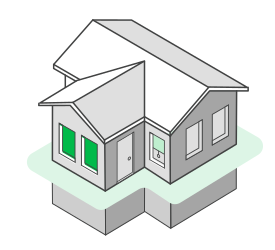
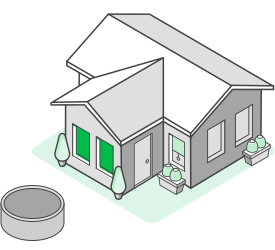
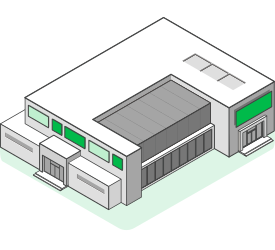
Where sewage pumps are installed
How sewage pump installation works
Cost of sewage pump installation
| Sewage pump installation | |
|---|---|
| Installation of the fecal pump to a depth of 3 meters | 6 000 MDL |
| Installation of the fecal pump to a depth of 5 meters | 7 000 MDL |
| Sewage pump removal | |
|---|---|
| Dismantling of the fecal pump | 6 000 MDL |
| Sewage pump commissioning | |
|---|---|
| Launching the fecal pump | 550 MDL |
Brands of sewage pumps we work with






Why customers trust us with sewage pump installation
Practical experience in sewage system installation
We regularly install sewage pumps in private houses, basements, and commercial premises. Over time, our specialists have worked with different types of sewage systems — from simple household solutions to complex pumping stations. This experience allows us to anticipate common issues and install equipment in a way that ensures stable system operation.
Equipment selection for a specific system
A sewage pump is selected not by a universal principle but according to the parameters of the sewer system: pipe depth, pumping distance, and wastewater volume. This approach reduces the load on the equipment and extends its service life. Proper pump selection often determines whether the system will operate without failures.
Compliance with technical installation requirements
During installation, mandatory system elements are used: a check valve, protective automation, and sealed connections. These components prevent backflow of water and protect the pump from overload. Installation is carried out in accordance with the technical requirements of the equipment manufacturers.
System testing after installation
After installation, the pump is started and tested under real operating conditions. The pumping speed, connection tightness, and correct operation of the automation are checked. This testing ensures that the sewage system operates reliably and is ready for continuous use.
Frequently asked questions


A sewage pump is installed when wastewater cannot flow out by gravity. This usually happens when the sewer system is located below the level of the main pipe, when the bathroom is in the basement, or when the septic tank is located at a distance. The pump provides forced wastewater pumping and stable operation of the sewage system.
The choice depends on the lifting height of the wastewater, the distance to the septic tank, and the volume of wastewater. For residential systems, pumps with grinders or compact sewage stations are most commonly used. Properly selected equipment operates reliably and reduces the risk of blockages.
Yes, installing a sewage pump in the basement is one of the most common solutions. The pump allows wastewater to be lifted from a basement bathroom or kitchen to the level of the main house sewer line. This makes it possible to fully use plumbing fixtures below the pipe level.
A sewage pump collects wastewater in a receiving chamber and automatically pumps it into the sewer system or septic tank. Many models are equipped with a grinder that processes solid waste and prevents pipe blockages.
The service life of a pump depends on the quality of the equipment and operating conditions. With proper selection and correct installation, household sewage pumps can operate for many years without serious failures. Regular system checks help extend the lifespan of the equipment.
A check valve is installed in almost all systems with a sewage pump. It prevents wastewater from flowing back and protects the equipment from overload. Without this component, the sewage system may operate unstably.
Most household pumps operate automatically and require minimal maintenance. It is recommended to periodically check the system and clean the receiving tank from possible contaminants. This helps maintain stable equipment operation.
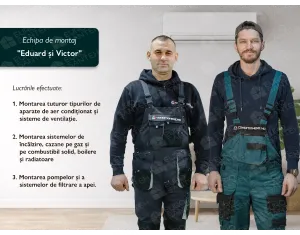
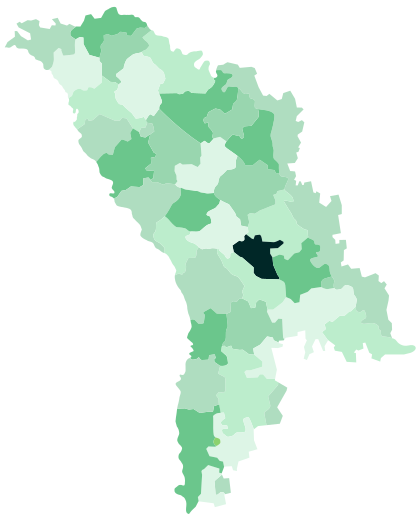
We provide sewage pump installation services throughout Moldova
- Anenii Noi
- Balti
- Basarabeasca
- Bender
- Biruinta
- Briceni
- Bucovat
- Cahul
- Cainari
- Calarasi
- Camenca
- Cantemir
- Causeni
- Ceadir Lunga
- Chisinau
- Cimislia
- Codru
- Comrat
- Cornesti
- Costesti
- Crasnoe
- Cricova
- Criuleni
- Cupcini
- Dnestrovsc
- Donduseni
- Drochia
- Dubasari
- Durlesti
- Edinet
- Falesti
- Floresti
- Frunza
- Ghindesti
- Glodeni
- Grigoriopol
- Hincesti
- Ialoveni
- Iargara
- Leova
- Lipcani
- Maiac
- Marculesti
- Nisporeni
- Ocnita
- Orhei
- Otaci
- Rezina
- Ribnita
- Riscani
- Singera
- Singerei
- Slobozia
- Soldanesti
- Soroca
- Stefan Voda
- Straseni
- Taraclia
- Telenesti
- Tiraspol
- Tvardita
- Ungheni
- Vadul lui Voda
- Vatra
- Vulcanesti


 Product catalog