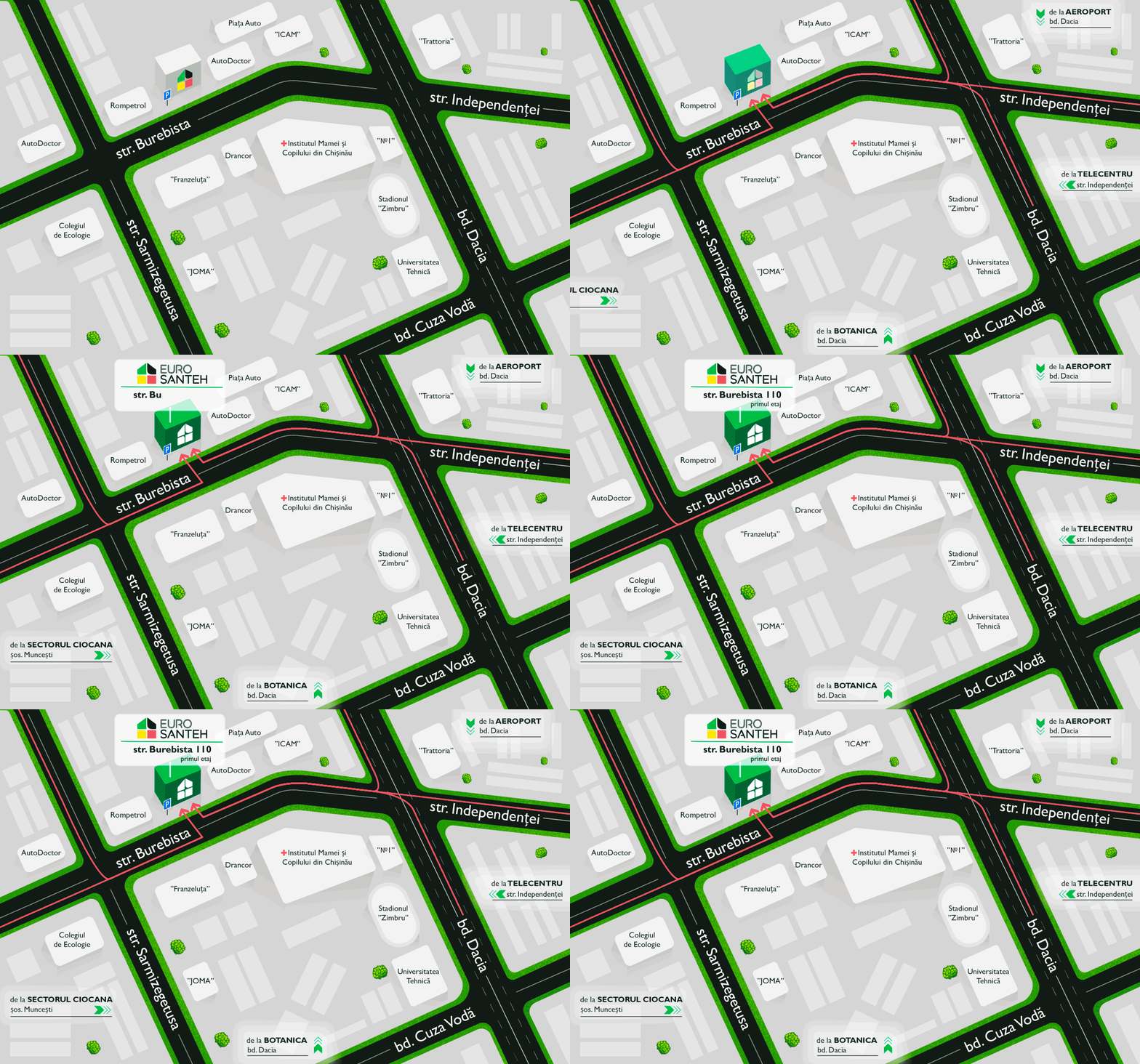
Chisinau, str. Burebista 110




 Call
Call 

 Product has been added to favorites

Multi-split system installation in Chișinău and across Moldova — installation in 1–2 days without rework


 Reviews


What is a multi-split system and how does it work
Multi-split — one centralized system instead of a chaotic set of separate air conditioners
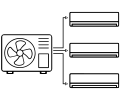
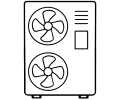
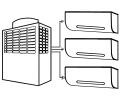
Instead of 3–4 outdoor units on the facade, one powerful inverter unit (5–12 kW) is installed, distributing cooling to 2–5 indoor units. This is not a “budget solution,” but an engineered architecture with centralized load management.
One compressor regulates power in real time
A multi-split system uses an inverter compressor with variable speed (approximately 20–120 Hz).
When only one room is being cooled — the system reduces speed.
When three rooms operate — it smoothly increases capacity.
With multiple separate split systems, each compressor starts independently, creating peak load on the electrical network and faster wear.
A multi-split works on balance, not constant “maximum output.”
Piping length and height differences are calculated in advance
Each indoor unit is connected with a separate refrigerant line.
Typical manufacturer limits:
up to 25 m per line
up to 60–70 m total
up to 10–15 m height difference
Exceeding these limits reduces efficiency, increases energy consumption, and overloads the compressor.
That is why the system is designed before installation.
Independent temperature control in each room
Each indoor unit has its own sensor and controller.
This means:
— bedroom +22°C
— living room +24°C
— children’s room +23°C
The outdoor unit automatically redistributes power without overload.
This is impossible with one single powerful split system for the entire apartment.
Why multi-split is more efficient in practice
When multiple separate air conditioners operate, each compressor starts independently. Starting currents are higher, and wear occurs faster.
In a multi-split system, one inverter compressor adapts output to actual demand.
In real conditions, this reduces peak energy consumption by 15–25% compared to several separate systems of similar total capacity.
Who are multi-split systems suitable for?
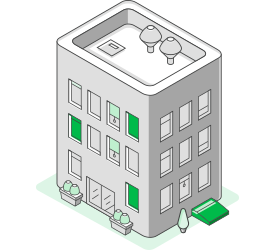

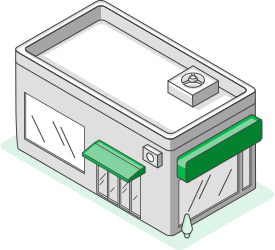
What is included in standard multi-split system installation?
1. Engineering capacity calculation and piping design
First, heat gains are calculated: 100–130 W per 1 m², adjusted for sun exposure, ceiling height, and internal equipment. Refrigerant lines are then designed considering allowable lengths (up to 15–25 m per line, up to 60–70 m total) and height differences of up to 10–15 m. If these limits are exceeded, the system loses efficiency and begins operating under overload.
2. Installation of units and piping
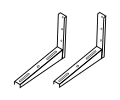
The outdoor unit is mounted on reinforced brackets with anti-vibration protection. Indoor units are positioned to ensure even air distribution. Copper pipes of the correct diameter, proper insulation, and correctly installed drainage are used. Mistakes at this stage lead to noise, leaks, and reduced performance.
3. Nitrogen pressure testing at 30–40 bar
Before commissioning, the system is tested for tightness. This allows detection of micro-leaks before refrigerant charging. Skipping this step often results in refrigerant leaks after 1–2 seasons and additional costs.
4. Vacuuming down to 300–500 microns
Air and moisture are removed from the system. If moisture remains, acid forms and damages compressor oil. Everything may appear to work — until the first serious failure. Proper vacuuming directly affects equipment lifespan.
5. Electrical connection and commissioning
A dedicated power line with protection is installed, inter-unit communication is checked, and each indoor unit is tested. After startup, pressure, temperature, and capacity distribution between rooms are verified. This is the final confirmation that the system is correctly designed and installed.
How much does multi-split system installation cost?
How multi-split system installation is carried out
Why is it important to trust multi-split system installation to professionals?
A multi-split system is not a household appliance that can be “simply connected.” It is a centralized climate system with one compressor that all rooms depend on. An installation mistake does not affect just one unit — it impacts the entire system.
Calculation error = compressor overload
If capacity is selected “by square meters” without considering sun exposure, panoramic windows, and real heat gains, the compressor operates at its limit. Constant overload reduces its lifespan by years.
The compressor is the most expensive part of the system. Its replacement can cost up to 30–40% of the total equipment price.
Skipping vacuuming = hidden internal corrosion
If installation is performed without vacuuming down to 300–500 microns, moisture remains inside the system. When it interacts with refrigerant, acid forms and destroys compressor oil.
Externally, the system appears to work. The problem becomes visible after 1–2 seasons — often after the “formal warranty” has expired.
Skipping pressure testing = refrigerant leak within a year
Professional installation includes tightness testing with nitrogen at 30–40 bar.
If this step is skipped, micro-leaks go unnoticed. After one season, pressure drops, efficiency decreases, and the compressor begins operating under increased load.
Incorrect piping length = loss of capacity
Manufacturers limit refrigerant line length (typically up to 15–25 m per line and up to 60–70 m total). Exceeding these values reduces efficiency and disrupts system balance.
Non-professional installation often ignores these limits, especially in complex layouts.
Electrical connection without protection = risk of control board failure
A multi-split system requires a dedicated power line with automatic protection. Connecting it to a shared outlet or undersized line increases the risk of voltage fluctuations and failure of the control board — one of the most expensive components.
Frequently asked questions


The price depends on the number of indoor units and piping length. On average, installing a 2-unit system is cheaper than installing two separate air conditioners because only one outdoor unit is required. The exact cost is calculated after measurements — considering piping, wall chasing, and access complexity.
New residential complexes often have restrictions on placing multiple outdoor units. One outdoor unit is easier to approve than three. It is recommended to check building management requirements before starting work.
Yes, but the installation method affects the budget. Piping can be installed openly in decorative trunking or partially concealed in walls. The earlier the system is planned in the renovation project, the lower the final cost.
If 2–4 rooms need cooling and facade space is limited, a multi-split is more practical. It requires one outdoor unit, reduces visual impact on the facade, and simplifies approvals. Separate splits are suitable when rooms are far apart or when the budget is strictly limited.
On average, installing 2–3 indoor units takes 8–16 hours. With complex piping or height work, it may take up to 2 days.
Most modern inverter models operate in heating mode down to −15°C, and some down to −20°C. This allows the system to be used as an alternative heating source during transitional seasons.
Yes, but within the total allowable capacity of the outdoor unit. The manufacturer specifies maximum load and simultaneous operation coefficients. System overload is not permitted.
Our installers


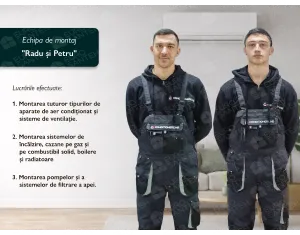


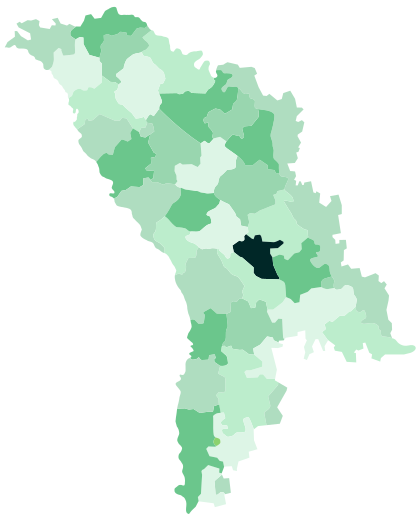
We provide air conditioner installation services throughout Moldova
- Anenii Noi
- Balti
- Basarabeasca
- Bender
- Biruinta
- Briceni
- Bucovat
- Cahul
- Cainari
- Calarasi
- Camenca
- Cantemir
- Causeni
- Ceadir Lunga
- Chisinau
- Cimislia
- Codru
- Comrat
- Cornesti
- Costesti
- Crasnoe
- Cricova
- Criuleni
- Cupcini
- Dnestrovsc
- Donduseni
- Drochia
- Dubasari
- Durlesti
- Edinet
- Falesti
- Floresti
- Frunza
- Ghindesti
- Glodeni
- Grigoriopol
- Hincesti
- Ialoveni
- Iargara
- Leova
- Lipcani
- Maiac
- Marculesti
- Nisporeni
- Ocnita
- Orhei
- Otaci
- Rezina
- Ribnita
- Riscani
- Singera
- Singerei
- Slobozia
- Soldanesti
- Soroca
- Stefan Voda
- Straseni
- Taraclia
- Telenesti
- Tiraspol
- Tvardita
- Ungheni
- Vadul lui Voda
- Vatra
- Vulcanesti


 Product catalog