Chisinau, str. Burebista 110




 Call
Call 

 Product has been added to favorites

Industrial air conditioning systems
 It is possible to order with installation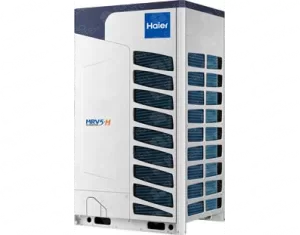

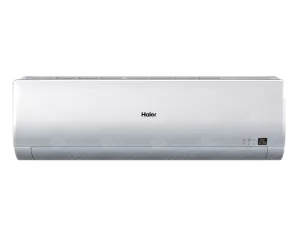
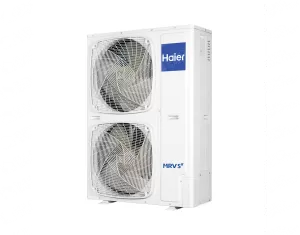
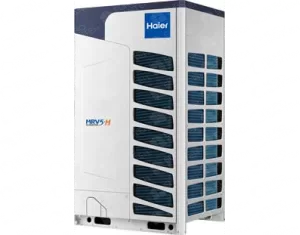
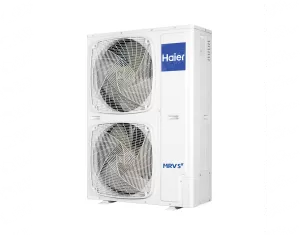
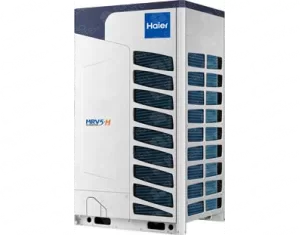
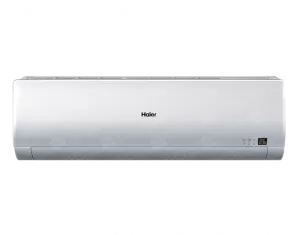
Industrial air conditioning systems are used in large-scale projects with complex layouts, where simple cooling is not enough and full climate control is required. These include business centers, hotels, shopping malls, industrial buildings and other high-demand environments with multiple zones.
In such projects, it is important to consider not only the total area, but also operational factors — varying occupancy levels, working schedules, and specific temperature and airflow requirements across different zones.
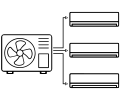
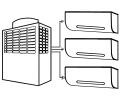
A key solution in this segment is VRF/VRV multi-zone systems, which allow dozens of indoor units to be connected and provide flexible temperature control across multiple spaces within a single centralized system. These systems are especially relevant for office buildings with multiple rooms, hotels or mixed-use commercial environments.
Equipment selection is always carried out individually, taking into account the size of the project, building purpose, technical constraints and energy efficiency requirements. You can order a complete solution — from design and supply to installation, delivered as a turnkey project across Moldova.
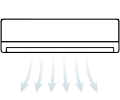
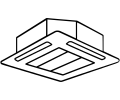
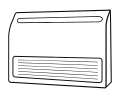
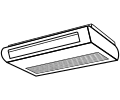
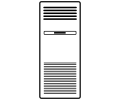
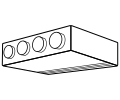
For smaller-scale projects or less complex applications, commercial (semi-industrial) air conditioning systems are typically used — including cassette, ducted and floor-ceiling solutions.


 Product catalog