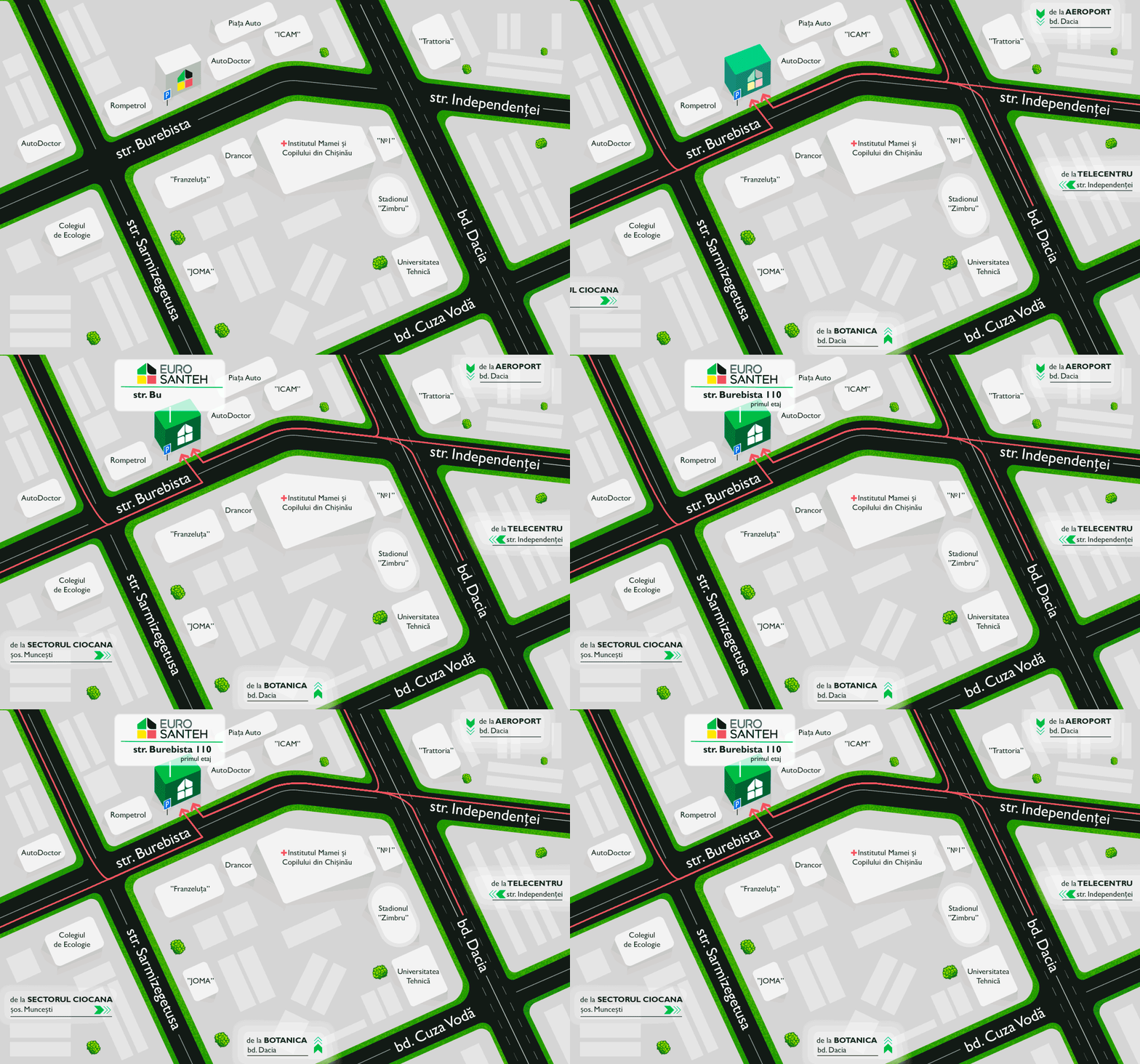
Chisinau, str. Burebista 110




 Call
Call 

 Product has been added to favorites

Console air conditioner installation in Chișinău in 3–6 hours with up to 3 years warranty


 Reviews


Why choose a console air conditioner?
A console air conditioner works more efficiently in heating mode and distributes air evenly throughout the room
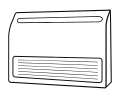
Unlike wall-mounted models, a console unit is installed in the lower part of the wall or under a window and directs airflow parallel to the floor. This reduces the temperature difference between the ceiling and occupant level by 1.5–2°C, which is especially noticeable in winter. Warm air does not accumulate under the ceiling but heats the living zone.
Suitable for spaces where standard installation is not possible
If a room has panoramic windows, low ceilings, an unusual layout, or limited upper wall space, installing a wall-mounted unit can be difficult. A console model is installed at the lower wall level and does not require free space above, offering more flexibility without major renovation.
An ideal solution for cold climates and transitional seasons
Most modern console models (Gree, Mitsubishi Electric, Daikin) operate stably in heating mode down to −15°C and lower. Thanks to the upward airflow direction, a “thermal curtain” effect is created, reducing the feeling of cold drafts near the floor — especially important in apartments with less insulated glazing.
Comfort without direct airflow to the face
Airflow is distributed along the floor and rises naturally. This reduces the risk of discomfort or overcooling, especially in bedrooms and children's rooms. According to customer feedback, the absence of a direct “cold blast” from above is a key reason for choosing a console model.
Quiet operation — from 19–23 dB in night mode
Inverter console models operate at a noise level comparable to a whisper. With proper installation and vibration isolation, the outdoor unit does not create wall resonance, which is important for apartments in Chișinău with panel structures.
Who is a console air conditioner suitable for?
What is included in the standard installation of a console air conditioner?
Marking, preparation, and drilling of the technical opening
Installation begins with precise marking of the mounting level, taking into account the drainage slope and distance to the exterior wall. A 45–55 mm diameter hole is drilled for the line set (refrigerant pipes, power cable, and drainage). Diamond core drilling or a hammer drill with dust extraction is used to minimize damage to finishes and prevent unit misalignment.
Installation of indoor and outdoor units
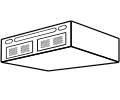
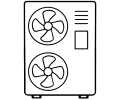
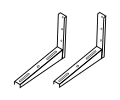
The indoor console unit is mounted on a fixing plate with mandatory level checking using a spirit level. The outdoor unit is secured on reinforced brackets rated for a load of 120–150 kg. The standard interconnection includes up to 3 meters of insulated copper piping, a power cable, and a drainage line with a natural slope for condensate removal.
System vacuuming and leak testing
Before start-up, the system is vacuumed with a professional pump for 15–25 minutes until a pressure of no more than 500 microns is achieved. This removes moisture and air from the circuit, directly affecting compressor lifespan. After vacuuming, connection tightness is tested — without this procedure, the unit’s service life may decrease by 20–30%.
Connection, commissioning, and mode testing
After opening the service valves, the system is started for the first time. The technician checks operating pressure, supply air temperature, correct switching between cooling and heating modes, and vibration levels of the outdoor unit. The client receives operating instructions and filter maintenance recommendations.
Fixed estimate with no hidden charges
Standard installation includes all listed works for piping up to 3 meters and no complex height operations. The cost is agreed upon before installation begins to eliminate additional charges after completion.
How much does console air conditioner installation cost in Chișinău?
How console air conditioner installation is performed
Why should console air conditioner installation be performed by a professional?
80% of failures occur due to installation errors, not the brand
According to service statistics, most problems during the first 2 years of operation are related to improper installation: incorrect pipe flaring, skipping vacuuming, and drainage slope mistakes. Even premium models like Mitsubishi or Daikin fail faster if the refrigerant circuit is assembled incorrectly. An air conditioner is a sealed refrigerant system. Any microcrack or air inside the circuit starts the compressor degradation process.
Skipping vacuuming = minus 2–4 years of service life
If the installer does not vacuum the system down to about 500 microns, moisture remains inside the line set. During operation, it turns into an acidic environment that destroys compressor oil. The first signs are reduced capacity after 6–12 months, followed by costly repairs. Compressor replacement can reach 30–50% of the unit’s price. Saving on installation often results in significantly higher expenses later.
Incorrect drainage slope causes leaks within months
Console models are installed in the lower part of the wall, and condensate drainage must have a consistent slope of at least 3–5 mm per meter. If the slope is incorrect, water flows back into the unit. After 2–3 months, wall stains, damp smell, and mold may appear. The issue is not the equipment — it is the installation. Fixing it requires dismantling and redoing the piping.
Poor outdoor unit mounting turns a quiet model into a noise source
Inverter console units operate at 19–25 dB. However, if brackets are installed without vibration pads or the wall type (panel, aerated concrete, brick) is not considered, vibration transfers to the building structure. As a result, a humming noise appears inside the apartment, especially at night. This is not a “model feature,” but an installation mistake.
Professional installation protects the equipment for 8–12 years
A console air conditioner is designed for long-term operation. With proper installation, vacuuming, and pressure verification, the system works reliably throughout its lifespan. If installation standards are violated, issues begin in the first or second season. The difference lies in installer qualification and adherence to regulations — not in the price of the equipment.
Frequently asked questions


Standard installation with up to 3 meters of piping costs on average 2500–4000 lei. The price includes wall drilling, unit installation, vacuuming, and start-up. Additional costs apply only for extended piping length, difficult facade access, or wall chasing. The final price is fixed before work begins — no “after-the-fact” recalculations.
The main difference is airflow direction and unit placement. A console model is installed near the floor or under a window and directs air along the floor surface, reducing temperature differences by 1–2°C and providing more even heating. In rooms with cold floors, this is immediately noticeable — feet are not left in a “cold zone.”
Yes, modern inverter models operate reliably in heating mode down to −15°C, and some brands down to −20°C. In Chișinău’s climate, this is sufficient for transitional seasons and mild winters. With proper capacity calculation and professional installation, the unit can cover up to 60–80% of heating needs for apartments up to 40–50 m².
Vacuuming is mandatory, not optional. Without removing moisture and air from the system, an acidic environment forms that damages the compressor. Skipping this procedure can reduce equipment lifespan by 2–4 years. The process takes 15–25 minutes and is performed before first start-up.
In most apartments in Chișinău, installation takes 3–6 hours. If the wall is panel or brick without structural complications, the work is completed within one working day. More complex cases — height work or longer piping — require additional time.
For units up to 3.5 kW, the existing line with a 16A breaker is usually sufficient. In new buildings, a dedicated line is recommended — it reduces overload risk and extends control board lifespan. The decision is made after inspecting the electrical panel.
The inverter outdoor unit operates at 45–50 dB. However, if installed without vibration pads or with incorrectly selected brackets, vibration can transfer to the wall and cause humming indoors. Professional installation considers facade material and mounting points to eliminate this effect.
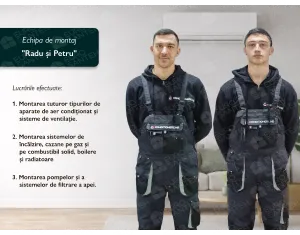
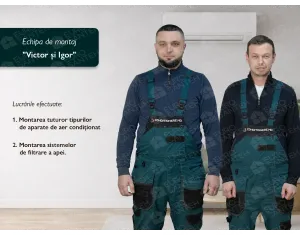
Our installers



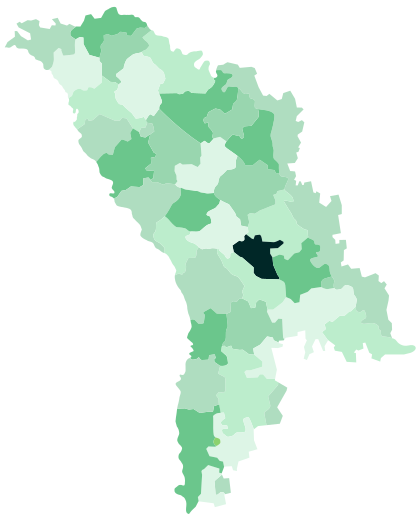
We provide air conditioning installation services throughout Moldova
- Anenii Noi
- Balti
- Basarabeasca
- Bender
- Biruinta
- Briceni
- Bucovat
- Cahul
- Cainari
- Calarasi
- Camenca
- Cantemir
- Causeni
- Ceadir Lunga
- Chisinau
- Cimislia
- Codru
- Comrat
- Cornesti
- Costesti
- Crasnoe
- Cricova
- Criuleni
- Cupcini
- Dnestrovsc
- Donduseni
- Drochia
- Dubasari
- Durlesti
- Edinet
- Falesti
- Floresti
- Frunza
- Ghindesti
- Glodeni
- Grigoriopol
- Hincesti
- Ialoveni
- Iargara
- Leova
- Lipcani
- Maiac
- Marculesti
- Nisporeni
- Ocnita
- Orhei
- Otaci
- Rezina
- Ribnita
- Riscani
- Singera
- Singerei
- Slobozia
- Soldanesti
- Soroca
- Stefan Voda
- Straseni
- Taraclia
- Telenesti
- Tiraspol
- Tvardita
- Ungheni
- Vadul lui Voda
- Vatra
- Vulcanesti


 Product catalog