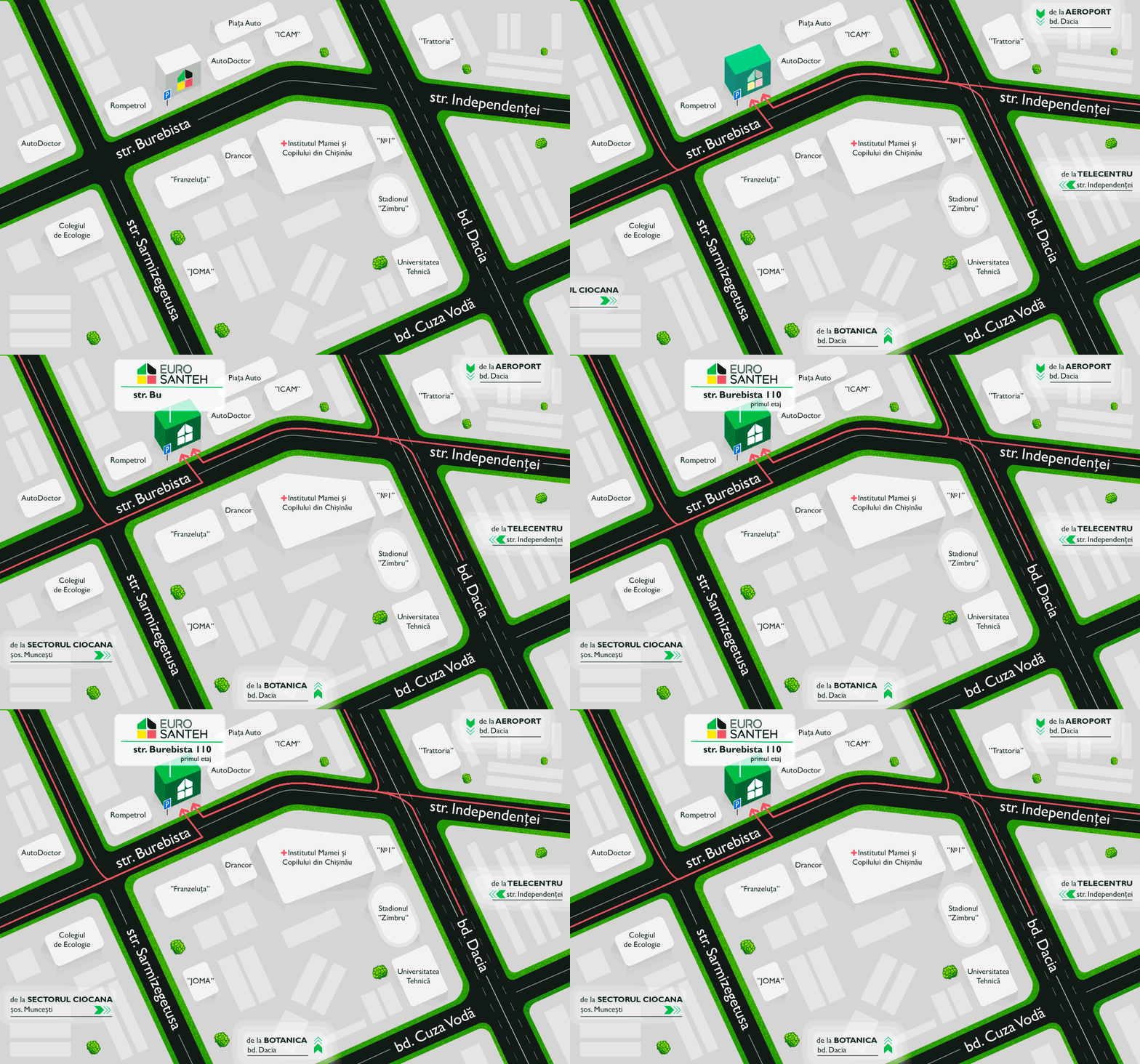
 Chisinau, str. Burebista 110




 Call
Call 

 Product has been added to favorites

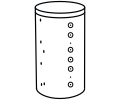
Buffer tank 750 liters in Chisinau
 Buffer tank, storage tanker
Buffer tanks with a capacity of 750 liters have become indispensable components in various sectors, offering a reliable solution for water storage and distribution. In an era where water scarcity is a growing concern, these tanks play a crucial role in ensuring efficient water management and sustainability.
The primary purpose of buffer tanks with a 750-liter capacity is to provide a stable and ample reservoir for water, catering to diverse needs across residential, industrial, and agricultural domains. Whether it's for storing water during supply disruptions or creating reserves for irrigation and other purposes, these tanks offer versatility and reliability.
One of the key advantages of 750-liter buffer tanks is their robust construction and ease of installation. They can be seamlessly integrated into existing water systems, whether indoors or outdoors, ensuring secure storage and minimal risk of leaks or damage. Their durable build ensures long-term performance, making them a cost-effective investment in the realm of water management.
Moreover, these buffer tanks offer economic efficiency compared to traditional water storage methods. Their superior safety features and hygienic design minimize the risk of contamination and water loss, resulting in savings in both water usage and maintenance costs over time. Additionally, their compatibility with modern water management technologies allows for optimized water consumption and real-time monitoring of reserves.
The versatility of buffer tanks with a 750-liter capacity extends beyond mere storage; they can also serve as integral components in smart water management systems. By integrating sensors and automation, these tanks enable precise control over water distribution, ensuring efficient use and reducing wastage. This not only conserves water resources but also contributes to energy savings and environmental sustainability.
In conclusion, buffer tanks with a capacity of 750 liters are indispensable assets in the quest for efficient water management and sustainability. Their robust construction, versatility, economic efficiency, and compatibility with modern technologies make them essential components across various sectors. As the world grapples with water scarcity and environmental challenges, these tanks emerge as vital tools in safeguarding water resources for future generations.


 Product catalog




















 Viber
Viber
 Whatsapp
 Telegram
