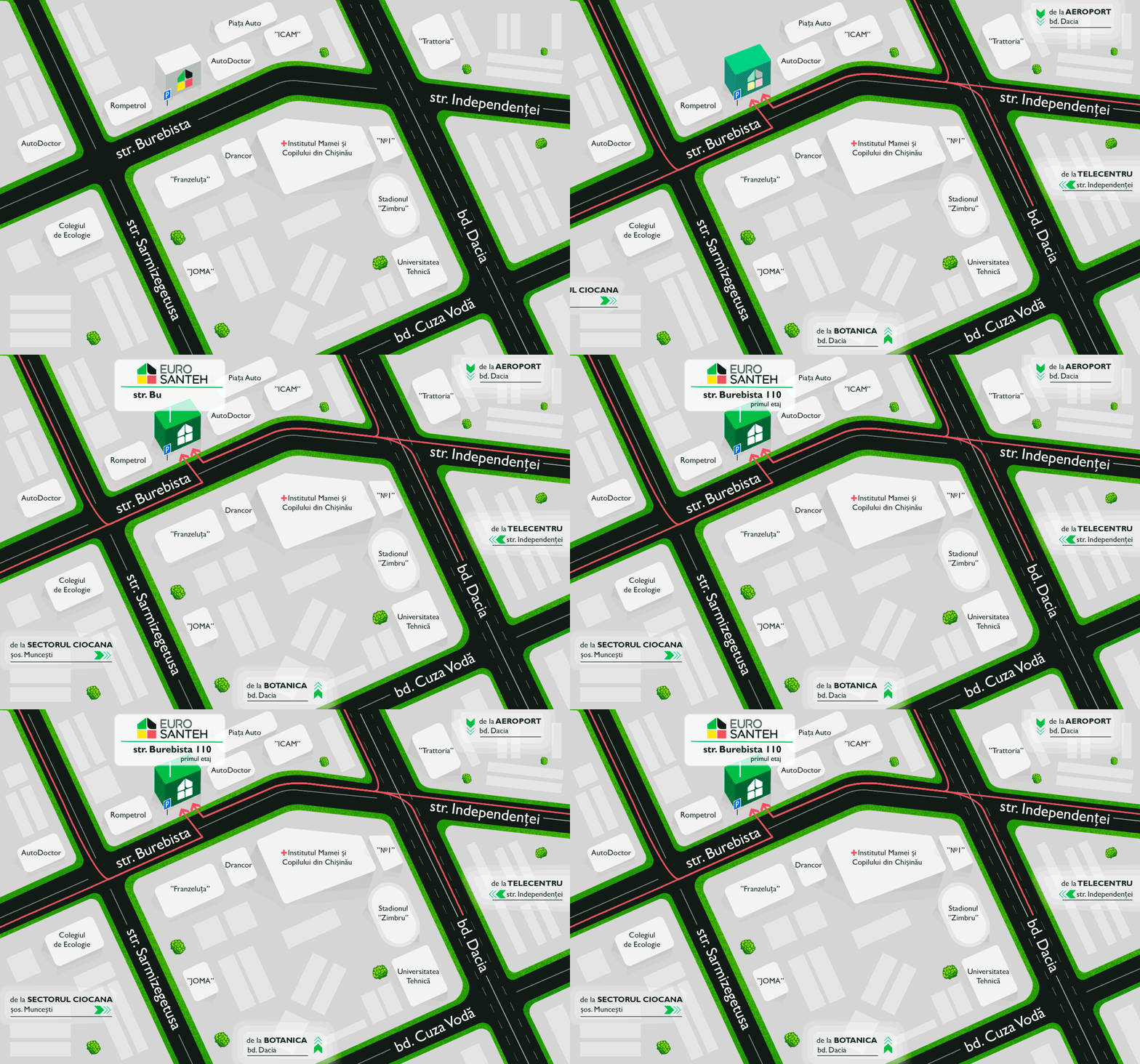
 Chisinau, str. Burebista 110




 Call
Call 

 Product has been added to favorites

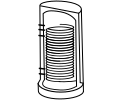
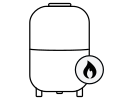
Buffer tank 500 liters in Chisinau
 Buffer tank, storage tanker
Buffer tanks with a capacity of 500 liters have emerged as a revolutionary solution in contemporary times, especially amidst the pressing need for efficient water management and resource utilization. In an era where environmental concerns loom large, these tanks play a pivotal role in ensuring sustainable water supply and effectively managing its distribution.
The primary purpose of buffer tanks with a 500-liter capacity lies in providing reliable storage for water, tailored to meet diverse needs. Whether for household use, industrial applications, or agricultural irrigation, these tanks offer a versatile solution. Their ample capacity enables them to tackle tasks ranging from storing water for potential supply interruptions to creating reserves for plant irrigation and other essential requirements.
One of the key advantages of 500-liter buffer tanks is their compactness and ease of installation. They can be effortlessly mounted both indoors and outdoors, making them ideal for various operating conditions. Thanks to their robust construction, they ensure secure water storage over extended periods, minimizing risks of leakage and damage.
Furthermore, these tanks boast significant economic efficiency. Compared to alternative water storage methods like barrels or cisterns, they offer higher levels of safety and hygiene, reducing the risks of contamination and water loss. Moreover, leveraging modern production technologies, they boast long lifespans and require minimal maintenance, thus proving to be a cost-effective solution in the long run.
It's worth noting that 500-liter buffer tanks can seamlessly integrate into smart water management systems. This integration facilitates water consumption optimization, automates water storage and distribution processes, and enables real-time monitoring of reserve levels. Such an approach not only enhances water resource efficiency but also contributes to energy savings and reduced operational costs.
In summary, 500-liter buffer tanks represent a crucial tool in ensuring sustainable water supply and rational resource utilization. Their benefits include high capacity, reliable construction, economic efficiency, and compatibility with modern management systems. These tanks are becoming an indispensable part of infrastructure, both domestically and industrially, aiding in addressing current environmental and economic challenges.


 Product catalog



















 Viber
Viber
 Whatsapp
 Telegram
