 Chisinau, str. Burebista 110




 Call
Call 

 Product has been added to favorites

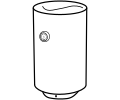
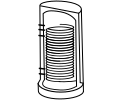
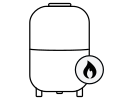
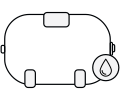
Buffer tank 300 liters in Chisinau
 Buffer tank, storage tanker
The 300-liter buffer tank plays a pivotal role in various industrial, commercial, and residential settings, serving as a crucial component in water management systems. Its significance lies in its ability to regulate water pressure, ensure a steady supply of water, and mitigate fluctuations in demand.
In residential applications, buffer tanks are commonly utilized to maintain consistent water pressure within the plumbing system. Whether it's for a single-family home or a multi-unit apartment complex, these tanks serve as a buffer between the main water supply and the internal plumbing, ensuring a steady flow of water for everyday use such as bathing, cooking, and washing.
Commercial establishments also rely on buffer tanks to meet their diverse water supply needs. From restaurants and hotels to office buildings and shopping centers, these tanks play a vital role in sustaining operations. They are often integrated into fire suppression systems, irrigation systems, and cooling systems, ensuring that there is always an adequate supply of water for essential functions.
In industrial settings, buffer tanks are indispensable for various manufacturing processes that require a continuous and reliable water supply. Whether it's for cooling equipment, facilitating chemical reactions, or cleaning operations, these tanks help maintain optimal conditions. They can also be used to store treated water for reuse, reducing overall water consumption and promoting sustainability.
The size of the buffer tank, such as the 300-liter capacity mentioned, is carefully chosen based on the specific needs of the application. While smaller tanks may suffice for residential use, larger tanks are often required for commercial and industrial purposes where water demand is higher. Proper sizing ensures that the tank can effectively handle fluctuations in demand without compromising performance.
Regular maintenance is essential to ensure the longevity and efficiency of buffer tanks. This includes routine inspections, cleaning, and repairs as needed to prevent corrosion, sediment buildup, or leaks. Additionally, monitoring water quality is crucial, especially in industrial settings where contaminants can affect both the tank and the processes it supports.
In conclusion, buffer tanks are integral components of water management systems, providing stability, reliability, and efficiency across various sectors. Whether it's maintaining water pressure in homes, supporting operations in commercial buildings, or facilitating manufacturing processes in industries, these tanks play a vital role in ensuring a steady supply of water for diverse applications. With proper installation, sizing, and maintenance, buffer tanks contribute to the overall functionality and sustainability of water systems.


 Product catalog



















 Viber
Viber
 Whatsapp
 Telegram
