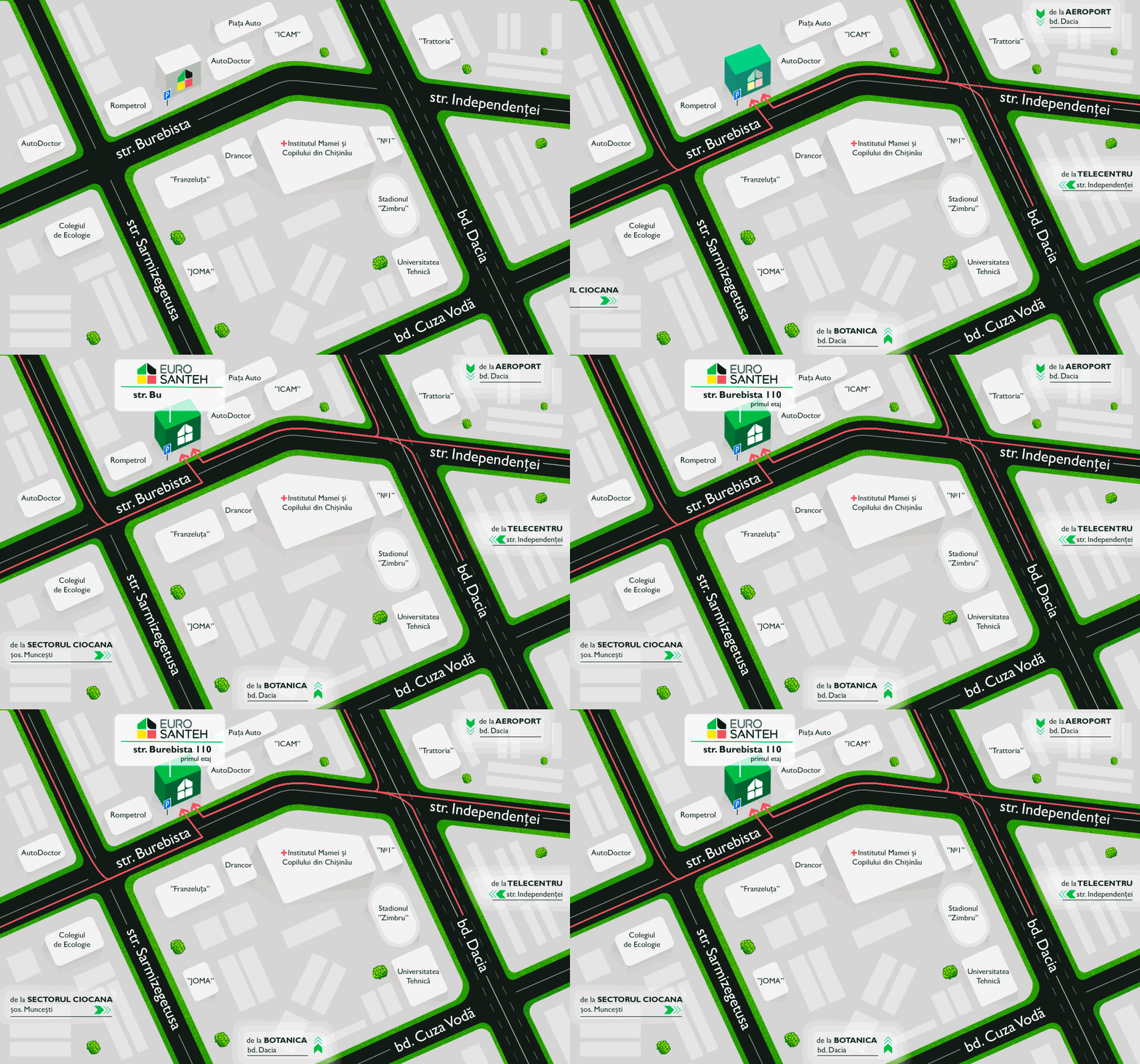
Chisinau, str. Burebista 110




 Call
Call 

 Product has been added to favorites

Underfloor heating installation in Chișinău and throughout Moldova, without rework or extra charges


 Reviews


What types of underfloor heating do we install?
We install only water-based underfloor heating — because in 90% of projects in Moldova it is the most economical and reliable solution.
We deliberately do not diversify into electric systems. The reason is simple for private houses and most new-build apartments in Chișinău, water-based underfloor heating provides lower operating costs, even heat distribution, and a service life of 30+ years when installed correctly.
Why water-based underfloor heating?
A hydronic system operates from a gas boiler or heat pump and uses a low-temperature circuit of 30–45°C. This reduces the load on the boiler and allows savings of up to 20–30% on gas compared to radiator heating at the same comfort level.
Floor temperature is distributed evenly across the entire room area. The difference between points rarely exceeds 1–2°C with a proper pipe spacing of 10–20 cm. In radiator systems, the difference can reach 5–7°C.
Where is water-based underfloor heating truly justified?
We install the system in:
- Private houses of 80–300 m²
- Cottages with gas boilers
- New buildings with individual heating
- Properties with 6–8 cm heated screed
If the property is connected to central heating without an individual circuit, we clearly inform clients about the risks and legal limitations.
Why don’t we offer electric underfloor heating?
In apartments of 70–120 m², full heating with electric cables can reach an average consumption of 6–9 kW during peak load hours. This significantly increases monthly winter expenses.
A water-based system connected to a gas boiler is more cost-effective over the entire heating season, especially in homes larger than 100 m².
We do not promote solutions that overload the electrical network and lead to higher long-term costs for the client.
Who is water-based underfloor heating installation suitable for?


How much does underfloor heating installation cost in Chișinău?
How does installation work?
Why shouldn’t you install water-based underfloor heating yourself?
Water-based underfloor heating is not just “laying pipes in a snake pattern.” It is an engineered system that requires hydraulic calculations, heat loss analysis, and pressure planning. A mistake at the design stage almost always becomes visible after the screed is poured — when fixing it means breaking open the floor.
The first common problem is the absence of a thermal calculation. Without proper calculations, pipe spacing is chosen “based on advice” or online videos. As a result, cold zones appear in corner rooms, while the floor temperature in the center may exceed 30°C. Overheating not only reduces comfort but can increase gas consumption by 15–25% per season.
The second mistake is exceeding the maximum allowed circuit length. If a single loop exceeds 100–110 meters, the circulation pump cannot ensure even flow. The floor heats unevenly, the boiler runs longer, and the issue becomes noticeable only during operation. Fixing it requires breaking the screed.
The third risk area is improper insulation. If a thin or soft insulation layer is installed beneath the pipes, part of the heat is lost downward into the slab. Losses can reach 10–20% of system capacity. Visually everything may look correct, yet heating bills increase.
Pressure testing is another critical issue. Many installers test the system with water “by eye” for about an hour. The professional standard is pressure up to 6 bar for at least 24 hours. Micro-leaks appear only under sustained pressure. If the screed is poured without proper testing, a leak may be discovered months later — after tiles or laminate flooring have already been installed.
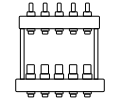
Finally, manifold balancing. Without adjusting flow meters, some rooms receive more heat carrier, others less. In a 150 m² house, temperature differences between rooms can reach 3–5°C. This is not just a matter of comfort — it affects the efficiency of the entire system.
Water-based underfloor heating is designed to last 30–50 years. But only with proper design and installation. Saving a few hundred euros at the start can lead to several thousand in repair costs when reopening a finished floor.
Frequently asked questions


Yes, if the apartment has individual heating (gas boiler). Connection to the central heating system is prohibited in most cases and may result in fines. Before installation, we verify the building’s technical conditions.
With proper calculation, gas consumption does not increase and in some cases decreases by 15–25% compared to radiator heating. This is due to the system operating at a low temperature range of 30–45°C, which improves boiler efficiency.
The optimal screed thickness is 6–8 cm. A thinner layer may cause uneven heat distribution and cracking, while a thicker layer increases thermal inertia and slows down room heating.
PEX (cross-linked polyethylene) pipes are designed for a service life of 30–50 years when temperature limits are respected. The manifold and automation components typically last 10–20 years, depending on the manufacturer and water quality.
Yes. Under tiles, the system works most efficiently due to high thermal conductivity. For laminate flooring, it is important to choose products labeled “suitable for underfloor heating” and maintain a surface temperature not exceeding 27°C.
On average, 8–12 circuits are required depending on layout and heat loss. The length of one circuit usually does not exceed 80–100 meters to ensure even circulation of the heat carrier.
In most cases, the boiler’s built-in pump is sufficient. However, for large areas or complex systems, an additional circulation pump is installed to ensure stable operation of all circuits.
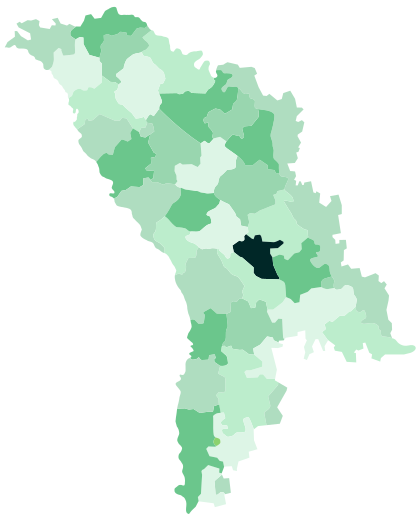
We provide installation services throughout Moldova
- Anenii Noi
- Balti
- Basarabeasca
- Bender
- Biruinta
- Briceni
- Bucovat
- Cahul
- Cainari
- Calarasi
- Camenca
- Cantemir
- Causeni
- Ceadir Lunga
- Chisinau
- Cimislia
- Codru
- Comrat
- Cornesti
- Costesti
- Crasnoe
- Cricova
- Criuleni
- Cupcini
- Dnestrovsc
- Donduseni
- Drochia
- Dubasari
- Durlesti
- Edinet
- Falesti
- Floresti
- Frunza
- Ghindesti
- Glodeni
- Grigoriopol
- Hincesti
- Ialoveni
- Iargara
- Leova
- Lipcani
- Maiac
- Marculesti
- Nisporeni
- Ocnita
- Orhei
- Otaci
- Rezina
- Ribnita
- Riscani
- Singera
- Singerei
- Slobozia
- Soldanesti
- Soroca
- Stefan Voda
- Straseni
- Taraclia
- Telenesti
- Tiraspol
- Tvardita
- Ungheni
- Vadul lui Voda
- Vatra
- Vulcanesti


 Product catalog