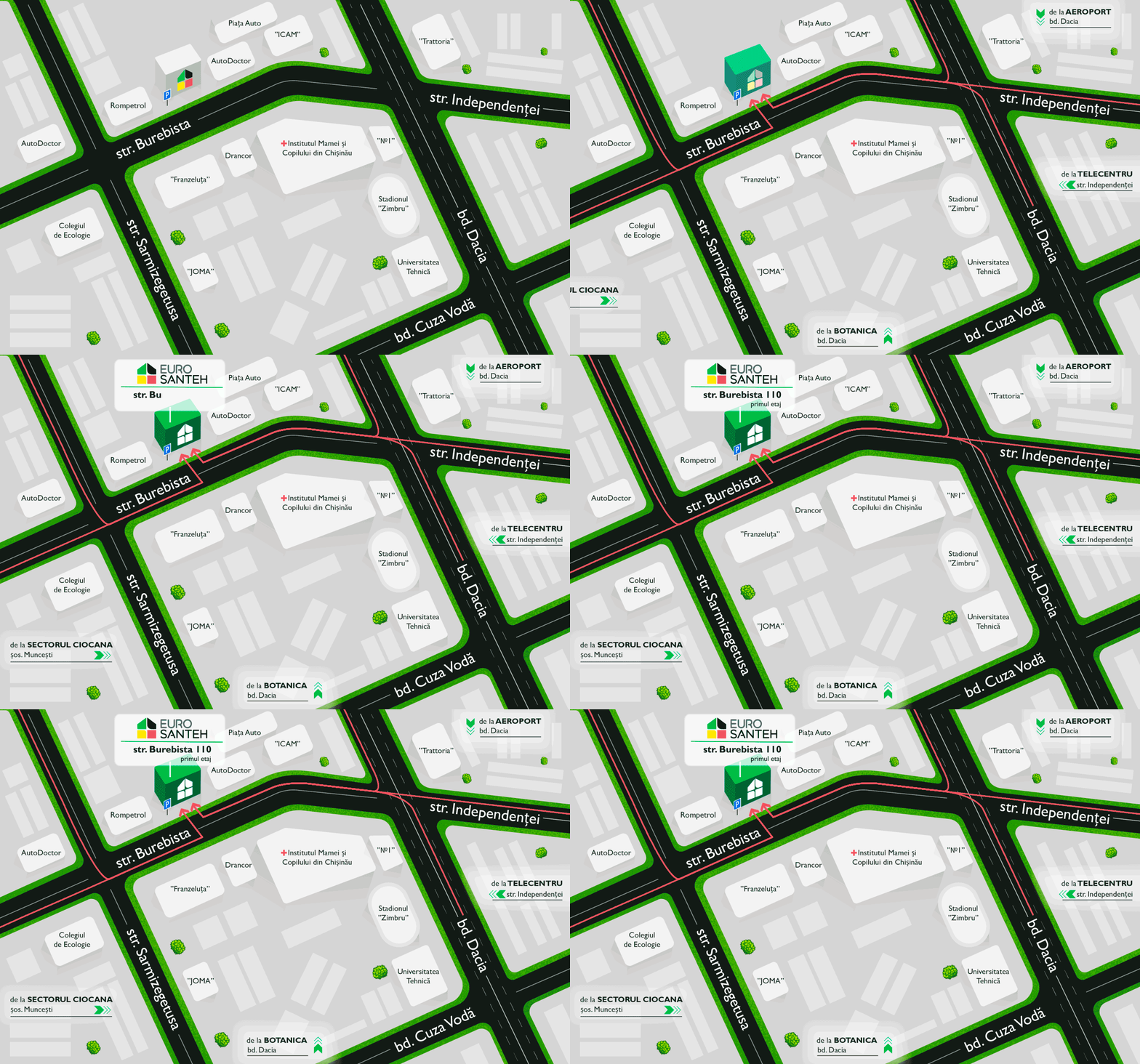
Chisinau, str. Burebista 110




 Call
Call 

 Product has been added to favorites

Multizone VRV/VRF systems
 Industrial air conditioning systems
  It is possible to order with installation




















VRV/VRF systems are used in projects where centralized climate control is required in buildings with multiple rooms and varying usage levels. These include business centers, hotels, shopping malls, administrative buildings and other environments where maintaining a stable indoor climate in each zone is essential.
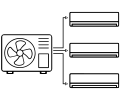
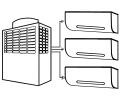
These systems allow dozens of indoor units to be connected to one or more outdoor modules, providing flexible temperature control across different spaces. They are especially suitable for buildings with different usage patterns — such as office layouts with multiple rooms, hotels with individual units, or commercial spaces with varying occupancy.
One of the key advantages of VRV/VRF systems is the ability to precisely adjust performance based on real operating conditions. Each zone can be controlled independently, adapting the system to actual load and usage schedules.
These systems offer high energy efficiency, scalability and integration into complex engineering solutions, making them an optimal choice for projects where more than simple cooling is required — but full climate control.
System selection is always carried out individually, taking into account building size, layout, space usage and technical requirements. You can order a complete solution — from system design and equipment selection to delivery and installation, implemented as a turnkey project across Chișinău and Moldova.
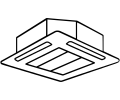
For smaller-scale projects or simpler applications, commercial (semi-industrial) air conditioning systems — such as cassette or ducted solutions — are typically used.
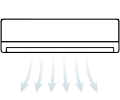
If the requirement is limited to cooling individual rooms without a centralized system, wall-mounted air conditioners are usually the more practical option.









































 Viber
Viber
 Whatsapp
 Telegram