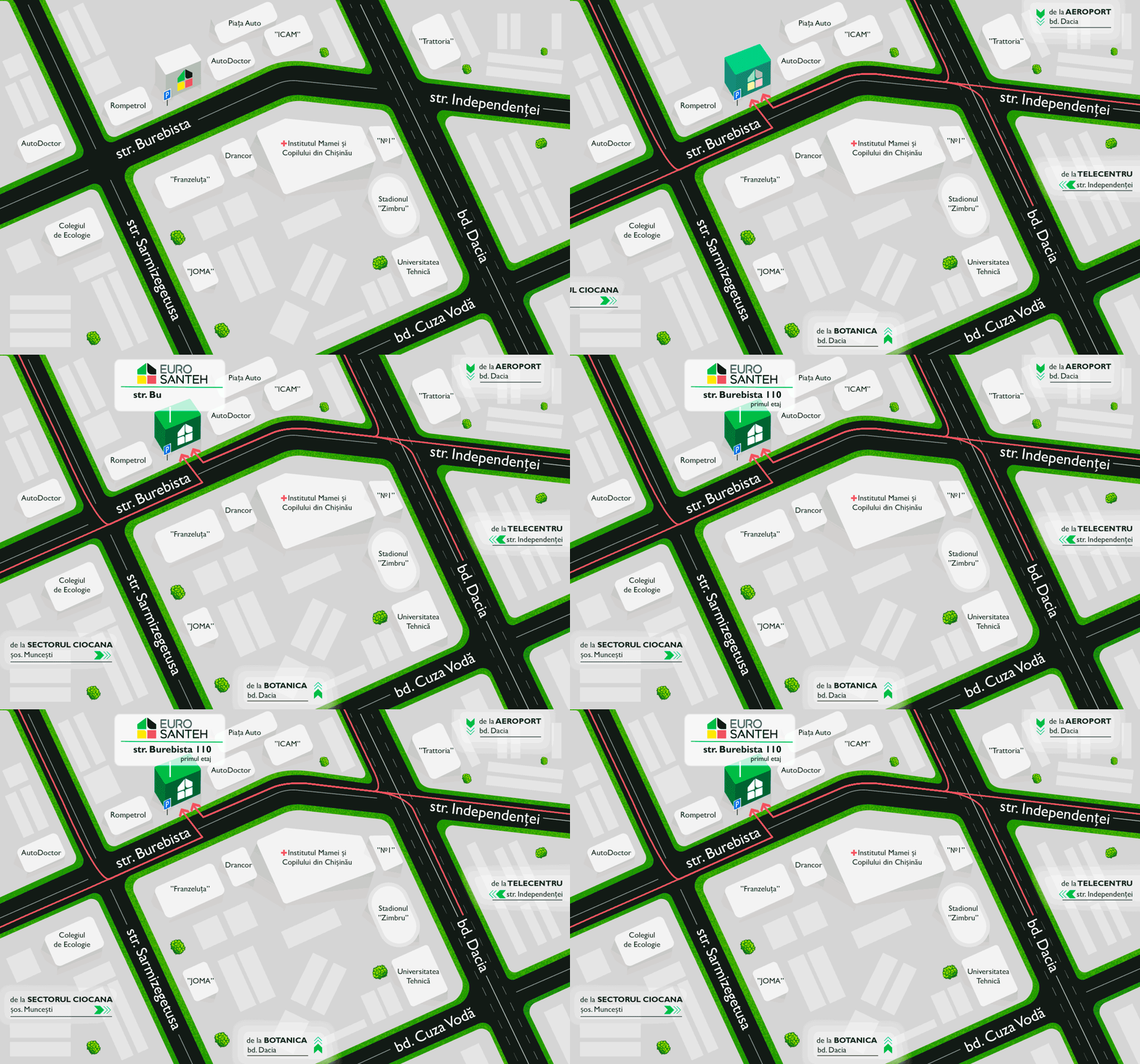
Chisinau, str. Burebista 110




 Call
Call 

 Product has been added to favorites

Air-to-Water Heat Pump: When It Makes Sense and How to Choose
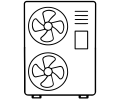
What is an air-to-water heat pump?
An air-to-water heat pump extracts heat from outdoor air and transfers it to the home’s heating system — underfloor heating, radiators and domestic hot water. The operating principle is similar to an air conditioner, but optimized for heating.
Unlike electric boilers, heat pumps transfer heat instead of generating it directly, which reduces electricity consumption.
When an air-to-water heat pump is a good choice
Heat pumps perform best in well-insulated buildings with low-temperature heating systems.
- Houses with underfloor heating or low-temperature radiators.
- New or renovated buildings with low heat loss.
- No gas connection or high gas connection costs.
- Long-term planning with predictable running costs.
When a heat pump may not be suitable
- Poorly insulated houses with high heat losses.
- Old heating systems requiring high water temperatures.
- Lack of space for the outdoor unit or improper installation conditions.
- Expectations of very fast payback without considering upfront costs.
Heat pump types: monoblock vs split
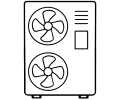
Monoblock — all components are housed in a single outdoor unit. Installation is simpler, but freeze protection is important.
Split systems — outdoor and indoor units are separated, offering more flexibility for complex layouts.
Operation in Moldova’s climate
Moldova’s climate allows efficient heat pump operation during most of the year. However, at very low temperatures efficiency decreases, and a backup heat source (electric heater, boiler or fireplace) may be required.
What to consider when choosing
1) Heat loss calculation. Proper sizing is impossible without thermal calculations.
2) Heating system type. Underfloor heating provides the best efficiency.
3) Electrical supply. Single-phase or three-phase power affects model choice.
4) Domestic hot water. Required volume and boiler type.
Where to see models and prices
To explore available equipment and estimate the budget, visit the category: heat pumps.
Frequently Asked Questions
Can a heat pump be the only heating source?
Yes, if the house is well insulated and the system is properly designed.
Does it work in winter?
Yes, but efficiency decreases at very low temperatures, so a backup heat source may be needed.
Is it suitable for older houses?
Possibly, but insulation upgrades and heating system modernization are often required.
Is it more efficient than an electric boiler?
Yes, because it transfers heat instead of generating it directly.
Where can I see available models?
In the category: heat pumps.


 Product catalog